THE WELLNESS JOURNAL
Your hair routine may be beautifully stocked—and still be overlooking the place every strand begins.
Serums care for lengths. Masks soften ends. But the scalp is where a slower ritual can change how hair care feels: more intentional, more tactile and far easier to return to each day.
Four minutes is short enough to keep. That makes the most interesting question less about finding another complicated treatment—and more about whether a simple, consistent scalp ritual deserves a place beside the rest of your hair care.
THE REASON TO STAY CONSISTENT
A small study.
An intriguing signal.
In a 2016 exploratory study, nine healthy men followed a standardised four-minute scalp-massage routine every day for 24 weeks. Researchers recorded an increase in average measured hair-shaft thickness—from 0.085 mm at baseline to 0.092 mm at 24 weeks.
MEASURED CHANGE
Average hair-shaft thickness
Koyama et al., ePlasty (2016). Exploratory study, n=9 healthy men, using a standardised massage device. The study did not test a Bai Cao Tang product and does not establish treatment of hair loss; the result is presented as an early research signal rather than a guarantee.
YOUR FOUR-MINUTE RESET
One minute per zone.
A ritual made to be repeated.
Use the tool on comfortable, intact scalp skin and begin with dry, gently detangled hair. Let the rounded teeth meet the scalp rather than dragging through the lengths.
Hairline to crown
Set the teeth at the front hairline and make slow, controlled passes toward the crown.
Above the ears
Hold the petal grip steadily and use small rocking or circular movements on each side.
Across the crown
Reposition rather than pulling. Allow all 28 rounded points to settle against the scalp.
Crown to nape
Complete the ritual with unhurried passes toward the back of the head, then pause.
“The most luxurious ritual is often the one simple enough to become yours.”

WHEN THE RIGHT SHAPE HELPS
Making the ritual
easier to return to.
You do not need a complicated collection of tools to care for the scalp. What matters is comfortable contact and a routine you will actually repeat. A purpose-designed tool can help when it makes the movement feel more controlled, more satisfying and less like another task.
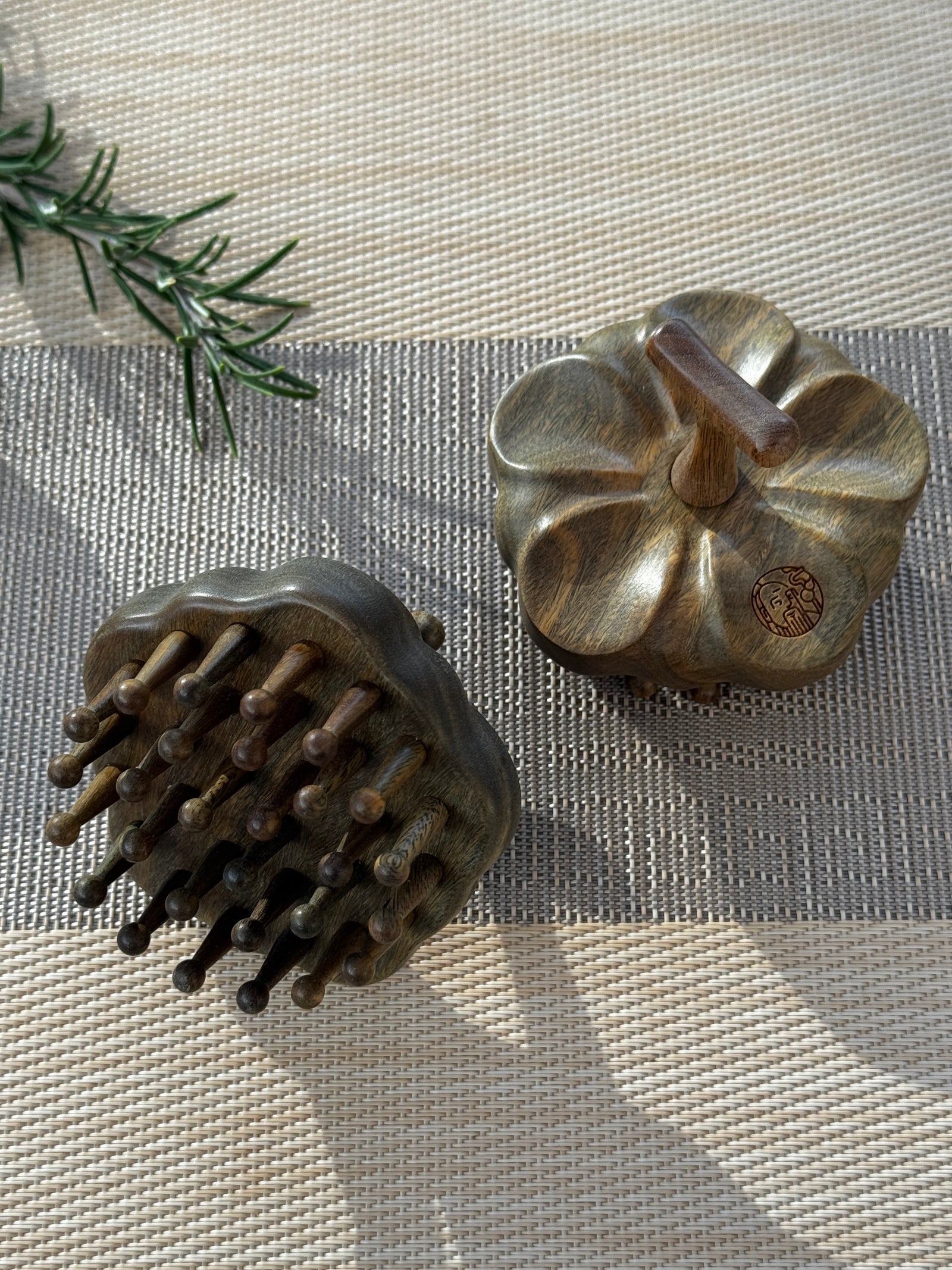
Bai Cao Tang’s 28-Tooth Sandalwood Petal Scalp Massage Comb uses longer outer teeth and shorter inner teeth to follow the natural curve of the head. Its concave form creates broad contact, while the petal grip settles securely between the fingers for slow, deliberate movement.


WHY GREEN SANDALWOOD
A ritual object that feels alive in the hand.
Unlike cold stone or mass-produced plastic, solid South American green sandalwood offers a naturally warm, substantial hand-feel. Each piece has its own grain, tone and resin-rich surface character.
The wood is left unlacquered and free from synthetic surface coatings. With handling, light and air, its colour may gradually deepen—allowing the tool to develop a visual story that belongs to its owner.

FROM MELBOURNE CLINIC TO DAILY RITUAL
Professional thinking.
Made beautifully usable.
Bai Cao Tang Wellness is shaped by experience from a Melbourne-based Chinese medicine clinic. Our approach brings traditional self-massage principles into modern daily life through controlled technique, thoughtful form and natural materials—not complicated routines.
The purpose of the 28-tooth design is practical: to help you create broad, repeatable scalp contact with a grip that feels secure enough to slow down.
BEFORE YOU BEGIN
Questions that make choosing easier.
Is this a hairbrush or a scalp-massage tool?
It is primarily a scalp-massage tool. The 28 rounded teeth are designed to make controlled contact with the scalp rather than pull through knots. Gently detangle first, then place, move and reposition the tool across the scalp.
Why are the inner and outer teeth different lengths?
The outer ring is longer and the inner ring shorter so the contact points can better follow the curve of the head. This concave profile is what gives the massage a broad, enveloping feel instead of concentrating everything in one small spot.
How much pressure should I use?
Start light and build only to a firm, comfortable sensation. The petal grip is designed to help you control the direction and pressure; the ritual should never feel sharp or painful.
What makes solid green sandalwood feel different?
It offers a naturally warm, substantial wooden touch rather than the cold feel of stone or the lightness of plastic. Every piece also carries unique grain, tone and surface character.
How should I care for it?
Keep the wood dry. Wipe it with a soft cloth after use and store it in its breathable linen pouch away from prolonged water, strong heat and direct sunlight.
FOUR MINUTES. TWENTY-EIGHT POINTS. ONE RITUAL.
Give your scalp a place in your hair-care routine.
Choose the solid green sandalwood tool designed to make daily scalp contact feel controlled, tactile and worth returning to.
Begin Your Four-Minute Ritual →SOURCES & CARE NOTE
- Koyama T, Kobayashi K, Hama T, Murakami K, Ogawa R. Standardized Scalp Massage Results in Increased Hair Thickness. ePlasty. 2016;16:e8.
- American Academy of Dermatology. Hair-care habits that can damage hair.
General wellness information only. Use light-to-moderate pressure and avoid broken, inflamed, infected or bruised skin. Persistent scalp symptoms, sudden shedding or concerns about hair loss deserve individual assessment by an appropriately qualified health professional.