The laptop closes. Your shoulders do not.
After hours of emails, meetings and scrolling, it can feel as though the workday is still sitting in your upper body: your hands keep their typing shape, your forearms feel busy, and your shoulders seem reluctant to leave the screen behind.
The answer is not necessarily a more perfect posture. A more useful place to begin is movement variety—interrupting long, static periods with small changes in position, light activity and a deliberate transition out of work mode.
This three-minute ritual combines that evidence-informed principle with controlled external self-massage. It is short enough to repeat, calm enough to look forward to and portable enough to move with your day.
The problem may be stillness, not a single “bad” posture
Modern desk work asks the body to do something it was not designed to do indefinitely: remain almost motionless while the mind moves quickly.
Safe Work Australia advises workers not to remain seated, standing or otherwise static for long periods. Its guidance notes that sitting for more than 30 minutes without a break is likely to be harmful and recommends changing posture and moving regularly.
Instead of chasing one ideal position for eight hours, build a rhythm that gives the body regular opportunities to move.
What the microbreak research found
A 2022 systematic review examined six controlled workplace trials involving 232 participants. The interventions varied, so the authors did not identify one universal routine. Their synthesis nevertheless supports a practical workplace idea: brief active microbreaks—around two to three minutes of light activity every 30 minutes—can be incorporated into the day without requiring a full workout.
Another systematic review and meta-analysis found that microbreaks were generally associated with better vigour and lower fatigue, while performance effects depended on the task and break length. A short pause is not wasted time; it can be part of how a sustainable workday is designed.

A three-minute desk-to-evening reset
Use this after your last meeting, between demanding tasks or whenever you notice you have become fixed in one position. Keep every movement comfortable. The aim is not intensity; it is a clear change of state.
Move first
Stand up, take a few unhurried steps and let your arms swing naturally. Gently roll the shoulders once or twice. A massage tool should complement movement—not replace it.
Reawaken palms and forearms
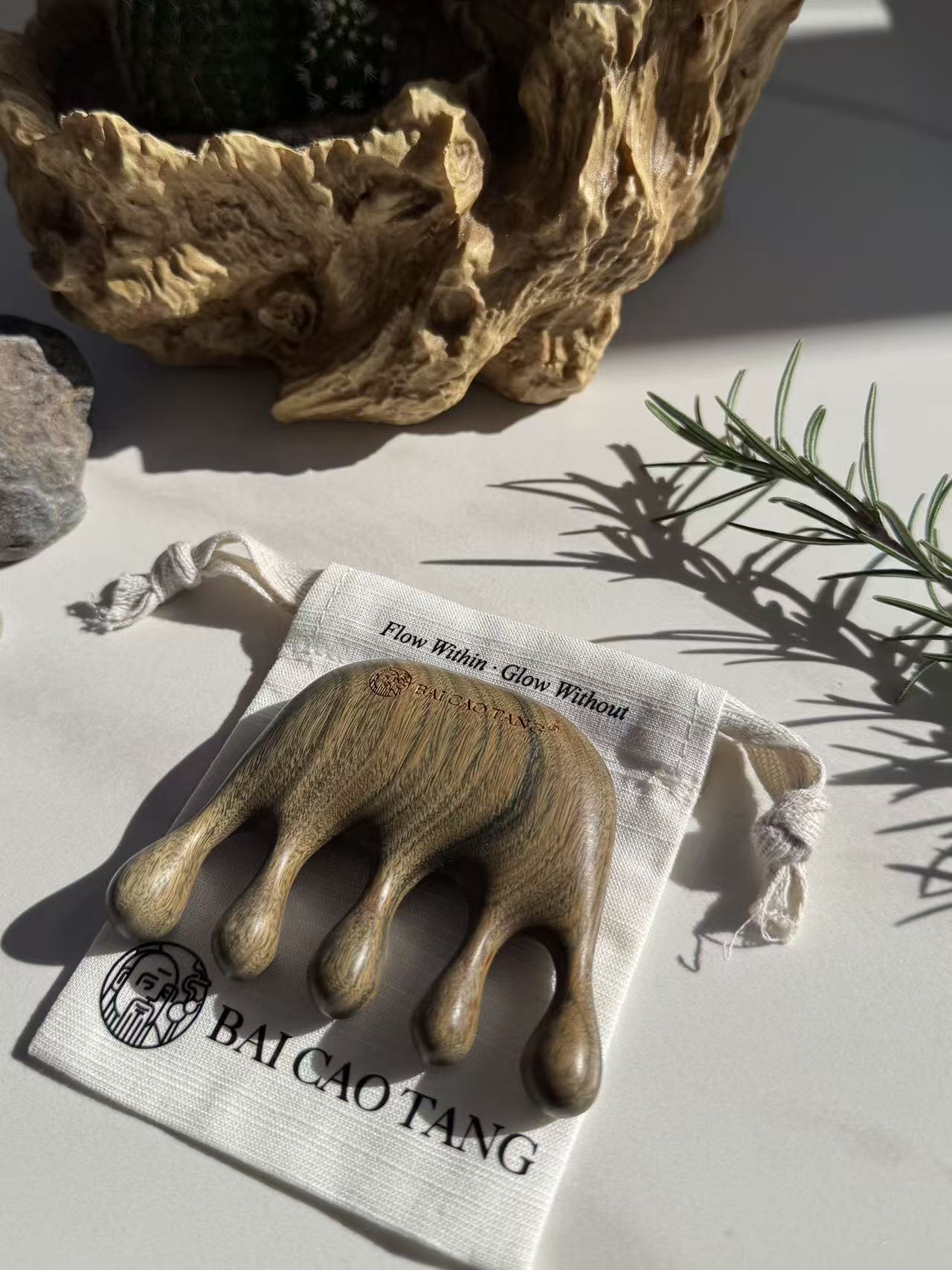
Rest one forearm on a desk or across your lap. With the broad rounded base of a massage tool, make slow passes over the fleshy part of the forearm. Turn the palm upward and use the smooth side for a lighter glide from mid-forearm toward the palm. Avoid sharp pressure over bones, the inner elbow and any area that feels numb, irritated or tender. Switch sides halfway.
Unhook the shoulders from the screen
Hold the tool in the opposite hand. Use its wide, rounded teeth or broad base over the muscular top of the shoulder, working in short, controlled strokes. Keep the contact on muscle—not the front or side of the neck and not directly on the spine. Pressure should feel calm enough that you do not brace against it.
Create a nape-to-shoulder transition
Place the rounded edge at the muscular base of the skull, slightly away from the centre line. Glide outward toward the shoulder, then lift and reset. Repeat two or three times on each side without scraping quickly or forcing range.
Close the ritual
Put the tool down. Let the arms hang, take one slow breath and notice the difference between the beginning and the end. This final pause gives the workday a finish line.

Melbourne clinic roots
A clinic-informed object for everyday life
Bai Cao Tang Wellness grew from a Melbourne Chinese medicine clinic, where technique, restraint and attention to the individual matter. That background shapes how we think about home rituals: the tool should feel beautiful enough to reach for, but the method should remain thoughtful.
Traditional East Asian practice has long valued manual techniques and body awareness. Contemporary workplace research approaches the question from another direction, emphasising movement variety and interruptions to prolonged static work. A modern ritual can respect both perspectives without turning a small daily practice into a medical promise.
Make the reset easier to keep
Pair the ritual with an event that already happens:
Consistency does not need to look heroic. Three deliberate minutes, repeated often, can be more realistic than a long routine saved for “someday”.
Frequently asked questions
Should I do this every 30 minutes?
Use the timing as a prompt to vary posture and move. The complete tool ritual can be reserved for one or two natural transition points in your day.
How much pressure should I use?
Choose light-to-moderate contact that lets the area remain relaxed. Stop if you notice sharp pain, tingling, dizziness, bruising or skin irritation.
Can I use the tool on the front of my neck?
No. Keep the ritual on broad external muscular areas, away from the front and side of the neck, the spine, broken skin and areas with reduced sensation.
Do I need a massage tool?
No. Movement comes first, and the routine should remain useful without a product. A rounded handheld tool is simply one way to vary external contact while keeping the pace slow and controlled.
References
- Radwan A, et al. Effects of active microbreaks on the physical and mental well-being of office workers: A systematic review. 2022.
- Albulescu P, et al. “Give me a break!” A systematic review and meta-analysis on the efficacy of micro-breaks. 2022.
- Safe Work Australia. Sitting and standing. Accessed 21 July 2026.
- SafeWork NSW. Sedentary work. Accessed 21 July 2026.
General information only. This ritual is not a substitute for individual medical care. Seek professional advice for persistent or worsening symptoms, injury, neurological symptoms or reduced sensation.