One thumb can perform the same small reach across a screen again and again: stabilise the phone, tap, swipe, return. Add keyboard work and one-handed holding, and the issue is not simply “screen fatigue”—it is a narrow movement pattern repeated for long stretches.
The answer is not necessarily a harder stretch or deeper pressure. A better first step is to change the task: release the grip, move through an easy range, add a minute of gentle touch, then return to the screen differently.
This four-minute mobility reset is designed to introduce variety—not to treat a condition. It focuses specifically on the thumb, fingers and palm after texting, scrolling or typing.
What phone-use research actually tells us
Phone-related hand research is still developing, and much of it is observational. The two studies below identify useful patterns without proving that phone use alone caused an individual’s symptoms.

Text-message exposure and new hand or finger symptoms were linked most clearly at the shorter follow-up; the pattern was not consistent across all five years. Study
University students reported phone-holding time and thumb-side discomfort at one point in time, so the result shows association—not cause. Study
Australian workplace guidance offers a practical bridge from evidence to daily behaviour. Safe Work Australia notes that repetitive or continuous movement and static positions can contribute to musculoskeletal strain over time. WorkSafe Victoria also advises varying tasks and avoiding long, uninterrupted periods of computer work.
THE USEFUL TAKEAWAY
You do not need to diagnose your hand to improve the way you use it. Share phone tasks between hands, support the device instead of pinching it tightly, vary the movement and insert small pauses before fatigue becomes the only reminder.
Your four-minute thumb-and-finger mobility reset
Set your phone down. Rest both forearms comfortably. Keep every movement small enough that your breathing stays easy.

Unclench
Let your wrists settle in a neutral position. Slowly open the fingers, pause, then close them into a soft—not tight—fist. Repeat five times. On the last repetition, allow the thumb to soften away from the palm.
Move
Spread the fingers only as far as comfortable, then bring them together. Make a small arc with each thumb. Keep the wrist quiet and shoulder relaxed; do not force one side to match the other.
Roll
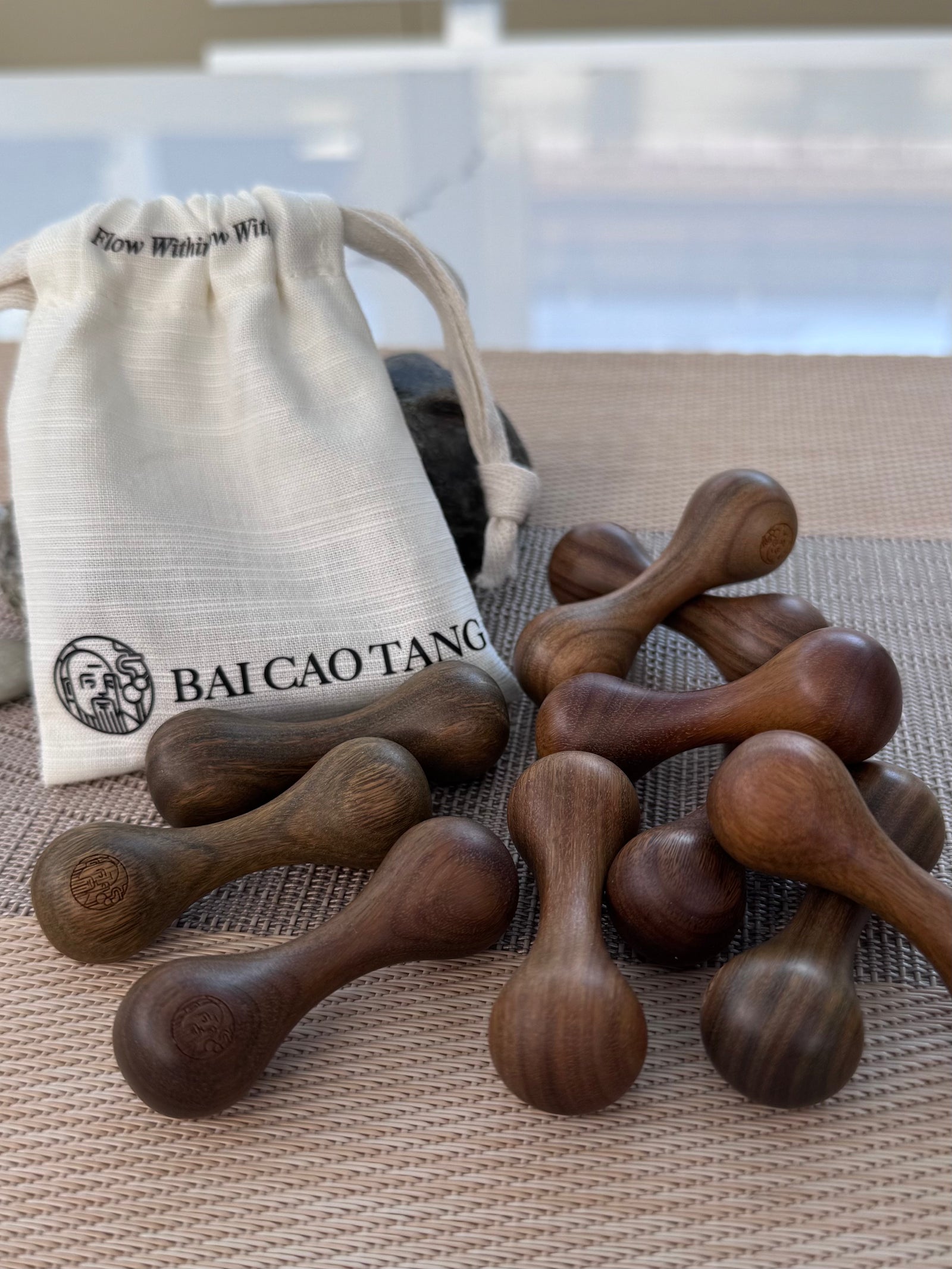
Using the opposite thumb—or a smooth hand roller—travel slowly across the fleshy centre of the palm, then along each finger from base toward tip. Use light pressure and avoid painful joints, broken skin or altered sensation.
Reset
Repeat on the other hand. Before returning to the screen, support the phone on a surface, dictate a longer message, use both hands, or complete a non-screen task first.
RETURN TO THE SCREEN DIFFERENTLY
Where tradition fits—and where evidence stops
TRADITIONAL LENS
Touch with intention
Traditional Chinese Medicine has long used deliberate touch across the palms and fingers within a meridian framework. Here, that tradition informs rhythm, restraint and attention to the whole hand.
MODERN GUARDRAILS
Change the repeated task
Current workplace guidance supports movement variety, less sustained gripping and comfortable ranges. Persistent or concerning symptoms need individual assessment.
MELBOURNE CLINIC ROOTS
Designed for ordinary days
Bai Cao Tang Wellness grew alongside a Melbourne Traditional Chinese Medicine clinic. That clinical background shapes a practical view of self-care: a home ritual should be clear, measured and easy to stop when it does not feel right.
Our registered Chinese medicine practitioner brings a professional lens to educational content, while the tools remain general-wellness objects—not substitutes for diagnosis, rehabilitation or individual treatment.
Frequently asked questions
How often can I do the four-minute reset?
Use it as an occasional transition after a concentrated block of typing or scrolling. More is not automatically better. The larger aim is to vary tasks and reduce long periods of the same grip or posture.
Should I press firmly with the roller?
No. Start with light contact. Firm pressure is not required for a tactile pause, and the routine should not create pain, tingling or numbness.
Can this routine treat carpal tunnel syndrome, arthritis or tendon problems?
It is not intended to diagnose or treat any condition. Persistent pain, night symptoms, swelling, weakness, locking, numbness or tingling should be assessed by an appropriate health professional.
Can a small roller help with finger dexterity practice after stroke?
Potentially, yes—when it forms part of an individual rehabilitation plan. Repetitive, task-specific hand practice is recognised in stroke rehabilitation and can support improvements in arm and hand function. If an occupational therapist or physiotherapist considers it appropriate, a small roller may provide a useful object for guided grasp-and-release, palm rolling or finger-to-palm coordination practice. The difficulty, repetitions and technique should match the person’s abilities, particularly when sensation, muscle tone or movement control has changed.
What makes the wood different from plastic or metal?
Green Sandalwood offers a naturally warm, dense and aromatic tactile experience. The benefit described here is sensory and design-led; the material itself has not been shown to treat hand symptoms.
References
- Gustafsson E, Thomée S, Grimby-Ekman A, Hagberg M. Texting on mobile phones and musculoskeletal disorders in young adults: a five-year cohort study. Applied Ergonomics. 2017;58:208–214. DOI: 10.1016/j.apergo.2016.06.012
- Banadaki FD, et al. The impact of smartphone use duration and posture on the prevalence of hand pain among college students. 2024. PubMed PMID 39044247
- Safe Work Australia. Lifting, pushing and pulling (manual tasks). Accessed 23 July 2026. Official guidance
- WorkSafe Victoria. Working with computers, printers and telephones. Accessed 23 July 2026. Official guidance
- Stroke Foundation Australia. Arm, hand and shoulder after stroke. Repeating an appropriately challenging movement or task is included among approaches used in rehabilitation. Official fact sheet
- Canadian Stroke Best Practices. Upper-extremity rehabilitation recommendations include repetitive, task-specific training for selected people with voluntary arm and hand movement. Clinical recommendations
General information only. The routine and Bai Cao Tang roller have not been clinically tested to prevent or treat hand conditions. Stop and seek professional advice for injury, persistent or worsening symptoms, swelling, weakness, locking, numbness, tingling or reduced sensation.