Your hands finish the email, scroll the screen, carry the bag and open the next tab—often without a pause between one demand and the next.
A hand-care ritual does not need to promise treatment to feel valuable. Sometimes its purpose is simpler: to interrupt the automatic rhythm of a screen-heavy day, move the fingers through a comfortable range and give your attention somewhere quieter to land.
At Bai Cao Tang Wellness, we think of this as a three-minute hand reset: brief enough to keep beside your laptop, deliberate enough to feel like a real change of pace.
WHY A SHORT PAUSE CAN MATTER
The evidence is about
the break—not the tool.
A 2022 systematic review and meta-analysis brought together 22 independent samples involving 2,335 participants. Across varied tasks and break activities, micro-breaks were associated with small but statistically significant improvements in reported vigor and fatigue.
Keep the interpretation precise
- Vigor effect: d = 0.36
- Fatigue effect: d = 0.35
- Overall performance effect was not statistically significant
- The review did not test a Bai Cao Tang roller
META-ANALYTIC EFFECTS
SmallWell-being signals across short breaks
Standardised mean differences reported by Albulescu et al., 2022.
YOUR THREE-MINUTE HAND RESET
Move. Roll. Hold.
Then return.
Keep every movement comfortable. This is a mindful mobility and self-massage routine, not an endurance test.
Open & close
Set the screen aside. Slowly open the fingers, then close them into a soft—not clenched—fist. Repeat at an easy pace.
Roll the palm
Place the Green Sandalwood Fingertip Wellness Roller in one palm. Use the other hand to guide it across the fleshy areas of the palm with light, controlled pressure.
Finger pathway
Gently roll or turn the piece between the fingertips and thumb. Let the movement stay small, smooth and pain-free.
Pause & return
Hold the wood loosely for one slow breath. Notice its weight, grain and warmth before returning to the next task.
WHY A SMALL OBJECT WORKS AS A CUE
Visible on the desk.
Easy to return to.
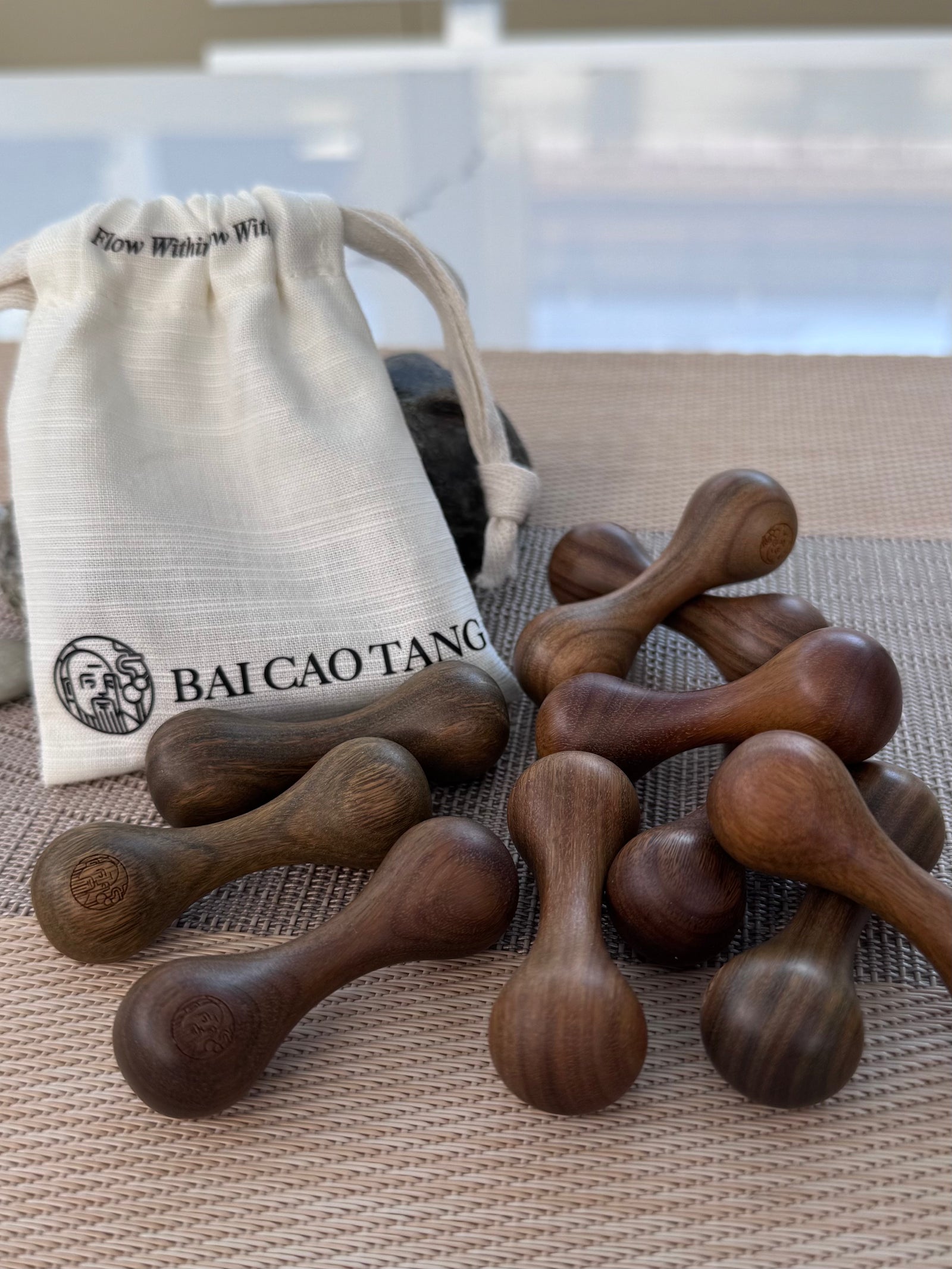
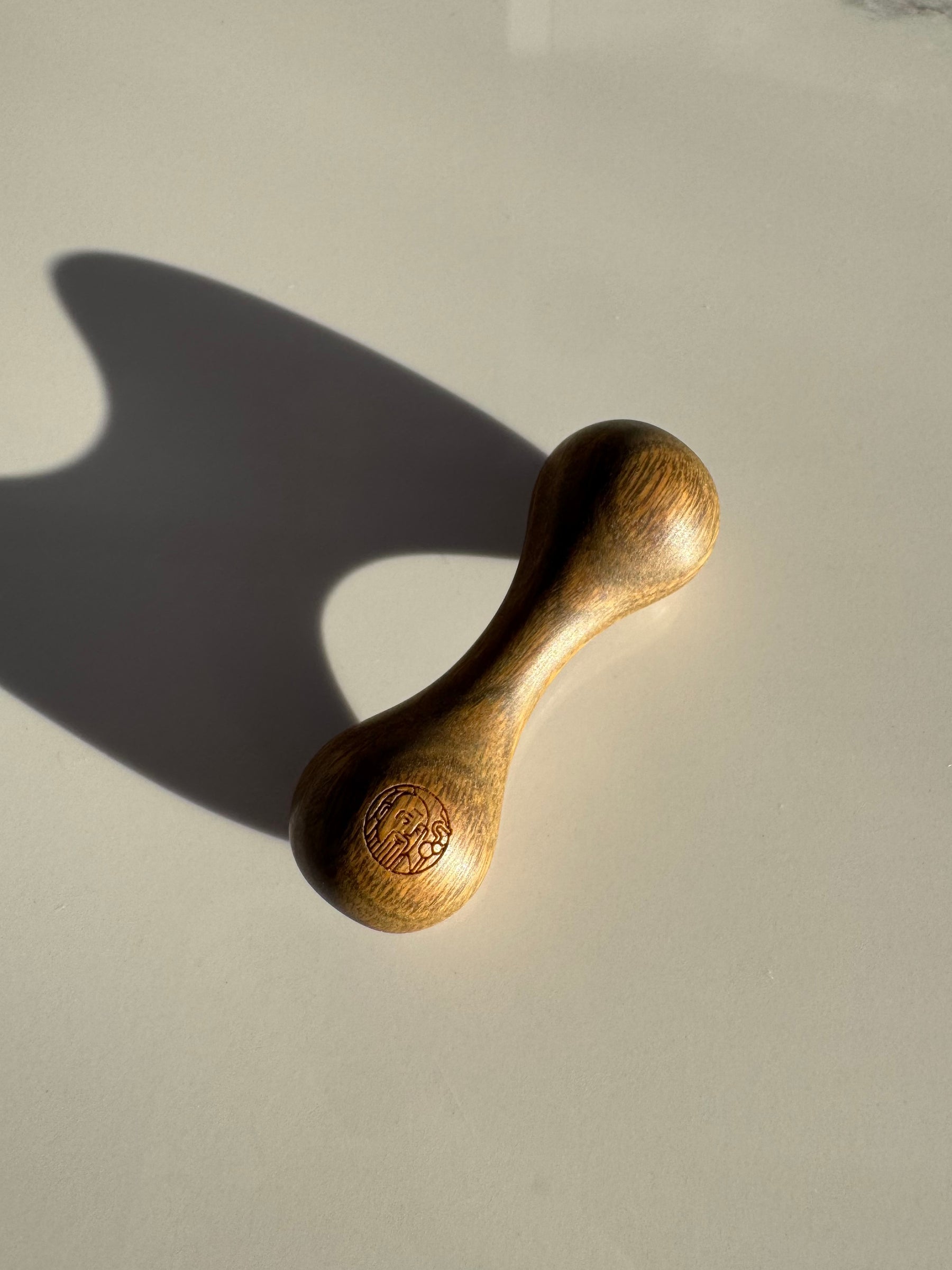
The Green Sandalwood Fingertip Wellness Roller is approximately 5.7 cm long—small enough for a desk, pocket or linen pouch. It is carved from one piece of solid South American Green Sandalwood, hand-polished and left without lacquer or chemical coating.
Its role is beautifully practical: it gives the hands a tactile task that feels different from tapping glass or pressing keys. Natural grain, weight and a warm wood surface turn a vague intention—“I should take a break”—into a ritual with a physical cue.

A NOTE FOR STROKE SURVIVORS & FAMILIES
Rehabilitation is personal.
The right object follows the plan.
After stroke, hand weakness, altered sensation, stiffness and coordination changes can differ greatly from one person to another. Australian and New Zealand stroke guidance notes that repetitive, task-specific training may be used for people who retain at least some voluntary arm and hand movement—but the task, assistance and dose should be selected for the individual.
A small tactile object may sometimes be incorporated into a clinician-designed activity, but Bai Cao Tang’s Fingertip Wellness Roller has not been clinically tested as a stroke-rehabilitation device. It should only be considered after a treating doctor, physiotherapist or occupational therapist confirms that its size, grip demand and movement are appropriate.
ROOTED
MELBOURNE CLINICAL ROOTS
Everyday ritual, with appropriate boundaries.
Bai Cao Tang Wellness was founded by practising clinicians in Melbourne. Our tools are designed for external self-massage, tactile awareness and general wellness—not as substitutes for medical, physiotherapy or occupational-therapy care.
FREQUENTLY ASKED QUESTIONS
Does the roller treat wrist pain or repetitive strain injury?
No. This article does not position the roller as a treatment. Pain, weakness, numbness, swelling or symptoms that persist should be assessed rather than worked through.
How hard should I press?
Use light, comfortable contact. More pressure is not the goal. Stop if the movement causes pain, tingling or irritation.
How often can I take a hand micro-break?
Use the ritual as a brief interruption when it fits your day. Research has not established one universally optimal micro-break schedule.
Can I use it after surgery, stroke or injury?
Only with guidance from your doctor, physiotherapist, occupational therapist or registered health practitioner.
Three quiet minutes. A clearer return.